

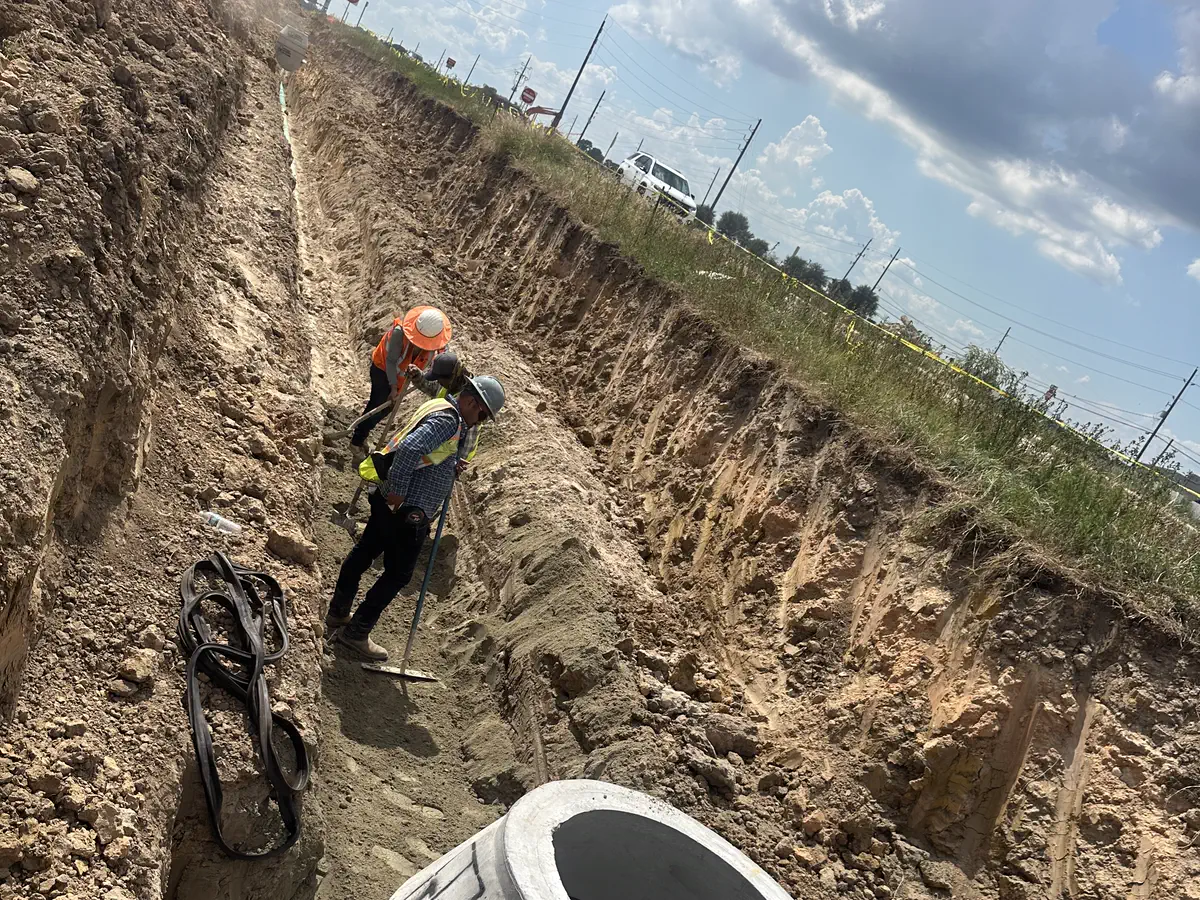
Irrigation System Installation
Sized to the Site, Not to the Catalogue.
Design-build and plan-spec irrigation installation sized to the site’s plant material and water source, with an eye toward long-term water efficiency and code compliance.
Overview
A Controller Cannot Fix a Badly Zoned System.
Smart controllers get sold as the answer to a commercial water bill, and on a system that was zoned properly they are. On one that was not, they automate the wrong schedule very precisely. Turf and shrub beds sharing a valve, sun and shade drawing the same run time, drip and spray competing for pressure: none of that is a programming problem, and no controller will solve it.
So zoning comes first. Plant material and exposure are grouped onto valves that can run independently, sized against the water source and the pressure it actually delivers. Backflow prevention goes in to code, a master valve and flow sensor shut the system down when a line breaks, and an as-built at closeout means the next person to open a valve box knows what they are looking at.
What’s included
Every Irrigation Installation Project Covers This.
Scope is written down before work starts, so “that was not included” never becomes a conversation halfway through.
- Smart, weather-based controllers. Programmed against local evapotranspiration and the restrictions in force, not left on the schedule that shipped in the box.
- Drip and spray zones matched by plant type. Beds on drip, turf on spray, sun and shade separated, so no valve is watering two things that want different amounts.
- Backflow prevention installed to code. The assembly your water provider requires, placed where it can be tested and serviced without excavation.
- Master valve and flow-sensing shutoff. A broken lateral shuts the system down instead of running until somebody notices the bill.
- Point-of-connection coordination with water providers. Meter sizing, tap and approvals settled with the provider before the trench is open.
- As-built documentation on completion. Zone maps, head locations and controller programming handed over in writing at closeout.
What the system is built from
- Weather-based controllers
- Flow sensors and master valves
- Pressure-regulating heads
- Inline drip tubing
- Testable backflow assemblies
- Swing joints and risers
- Valve boxes and wire splices
Design-build and plan-spec irrigation sized to the site’s plant material, water source and code requirements.
How it works
Four Steps, No Surprises.
You will always know what happens next, who is coming, and what it costs before work starts.
-
01
Consult & Assess
We walk the property together, test the soil and drainage, and listen to how you actually want to use the space. Free, and about an hour.
-
02
Design & Plan
You get a scaled plan, a planting palette, and a line-item budget. We revise it with you until it is right: on paper, not on site.
-
03
Build & Install
Our crews handle grading, hardscape, irrigation, and planting in sequence, with a named lead on site and a weekly progress update.
-
04
Nurture & Maintain
A garden is not finished the day it is planted. We stay on through establishment and, if you like, for the years after.
Questions
Irrigation Installation, Answered.
The four things people ask us most before booking this work.
Something not covered?
Call (832) 692-3165 and speak to the person who would run your project.
Yes, and that is most of our new-construction work. Where the plan and the site disagree, such as pressure that does not match the calculation or a point of connection that has moved, we raise it before we trench rather than building something that will not perform.
It is programmed to whatever ordinance applies at the property on the day we commission it. Restrictions change, and weather-based controllers turn that into a reprogramming job rather than a rebuild, which is a large part of why we specify them.
We install the assembly to code and coordinate the initial test. Annual testing after that usually sits under an irrigation maintenance agreement, which is a separate scope.
Yes, though both change the design. Filtration, pressure and the separation requirements for reclaimed water are sized into the system rather than added afterwards, so tell us the source before we quote it.


